<?xml version="1.0" encoding="utf-8"?><feed xmlns="http://www.w3.org/2005/Atom" ><generator uri="https://jekyllrb.com/" version="3.10.0">Jekyll</generator><link href="https://tanveerkarim.github.io/feed.xml" rel="self" type="application/atom+xml" /><link href="https://tanveerkarim.github.io/" rel="alternate" type="text/html" /><updated>2026-07-14T10:49:17-04:00</updated><id>https://tanveerkarim.github.io/feed.xml</id><title type="html">Tanveer Karim</title><subtitle>Tanveer Karim is an observational cosmologist and Dunlap Postdoctoral Fellow at the University of Toronto, mapping the Universe&apos;s largest structures with DESI and developing statistical and machine-learning methods for cosmology.</subtitle><author><name>Tanveer Karim</name></author><entry><title type="html">In-Person Observing Run at CTIO</title><link href="https://tanveerkarim.github.io/posts/2023/11/blog-post-1/" rel="alternate" type="text/html" title="In-Person Observing Run at CTIO" /><published>2023-11-08T00:00:00-05:00</published><updated>2023-11-08T00:00:00-05:00</updated><id>https://tanveerkarim.github.io/posts/2023/11/blog-post-1</id><content type="html" xml:base="https://tanveerkarim.github.io/posts/2023/11/blog-post-1/"><![CDATA[<p>I finally got a chance to do some in-person observing run, and what a better place to do so than the <a href="https://noirlab.edu/public/programs/ctio/victor-blanco-4m-telescope/decam/">DECam</a> at the 4-M Blanco Telescope at the <a href="https://noirlab.edu/public/programs/ctio/">Cerro Tololo Inter-American Observatory (CTIO)</a>!</p>

<p>This is my third time in Chile and also third time back at CTIO.  When I first arrived here as a <a href="https://noirlab.edu/science/resources/REU-PIA/program/2015">REU intern</a> way back in 2015, DECam was the biggest deal in town. This half a gigapixel camera with 3 square degree field of view is optimal for imaging large swaths of the sky and for extragalactic analyses. While at that time I only got to use the 0.9-M SMARTS telescope for one night, I always wanted to try my hands on DECam someday. So when the opportunity arose to do some in-person observing, I said yes!</p>

<h2 id="goal-of-the-observing-run">Goal of the Observing Run</h2>
<p>As you may know from my research page already, the Dark Energy Spectroscopic Instrument (DESI) is making the largest 3D map of the Universe in spectroscopy. However, to know <em>a priori</em> which targets we should get spectra of, we need good quality imaging data for target selection. Since DESI is way ahead of its schedule, the collaboration has decided to extend some further imaging as a part of the <a href="https://www.legacysurvey.org/">DESI Legacy Imaging Surveys</a> and get a better completeness of the Southern sky.</p>

<p>This resulted in the collaboration at-large winning nights at CTIO, and I will be involved in observing for 5 nights, in <em>g-</em>, <em>r-</em>, and <em>z-</em>bands.</p>

<h2 id="day-0">Day 0</h2>

<p>I took a 10.5 hour long direct flight from JFK to Santiago and then another 1 hour flight from Santiago to La Serena, followed immediately by a 2 hour drive to the CTIO mountain top. It was as exhausting as it sounds but the delicious food of CTIO always is there to make your day!</p>

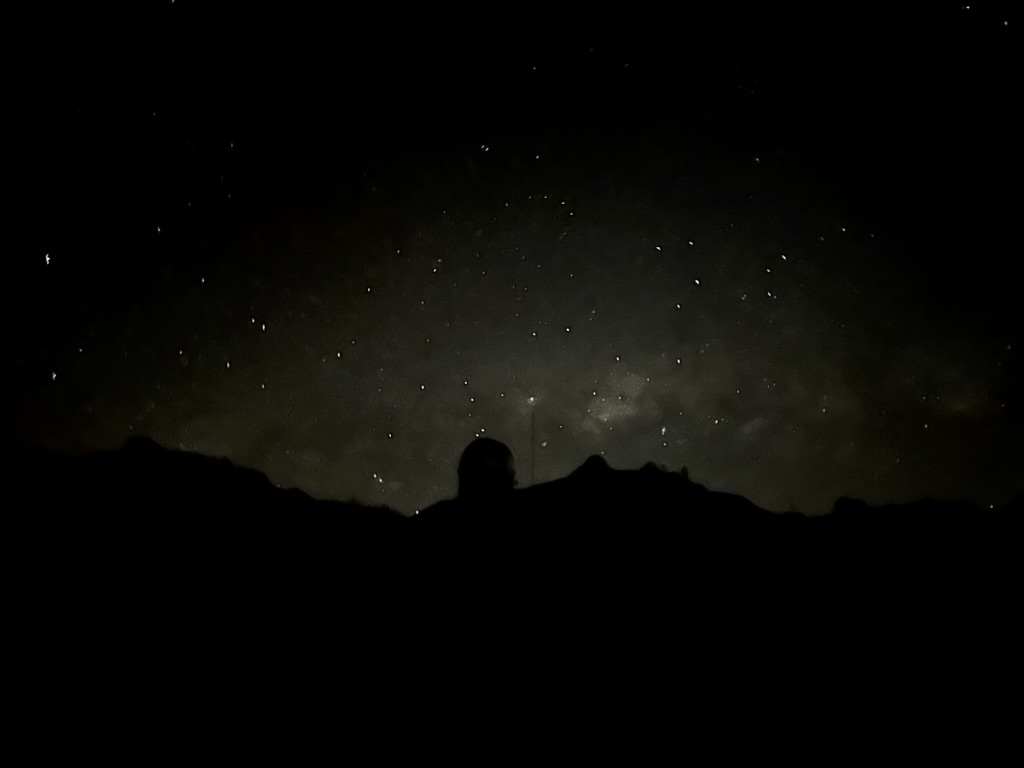
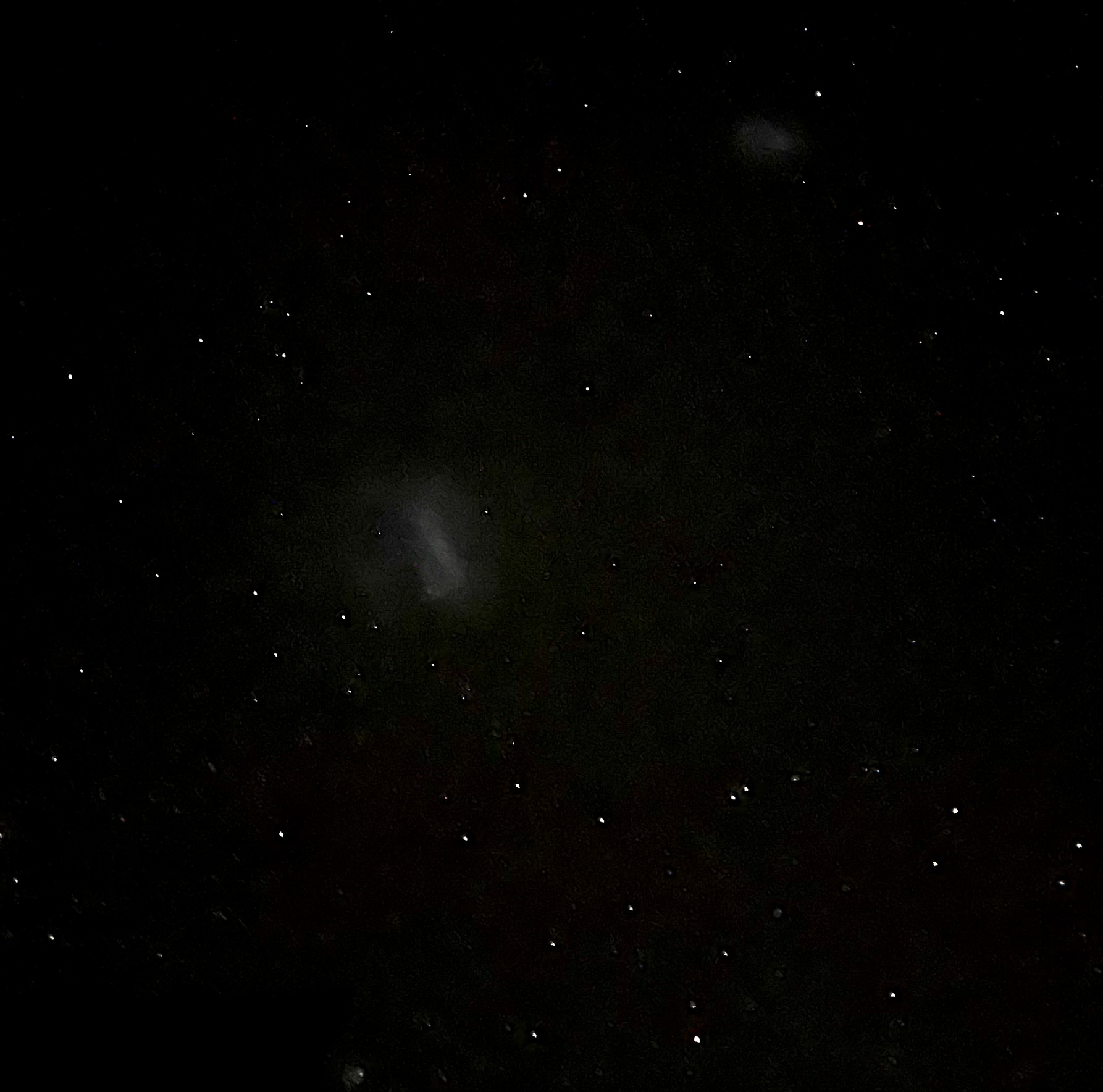
<p>My co-observer and I decided to shadow the Observing Support for this night and got rewarded with some breathtaking views of the Milky Way and the Magellanic Clouds.</p>

<h3 id="blanco-telescope-overlooking-the-milky-way">Blanco Telescope overlooking the Milky Way</h3>
<p><img src="/images/blog/2023-11/milky-way.jpeg" alt="image tooltip here" /></p>

<h3 id="the-magellanic-clouds">The Magellanic Clouds</h3>
<p><img src="/images/blog/2023-11/magellanic-clouds.jpeg" alt="image tooltip here" /></p>

<h2 id="day-1">Day 1</h2>

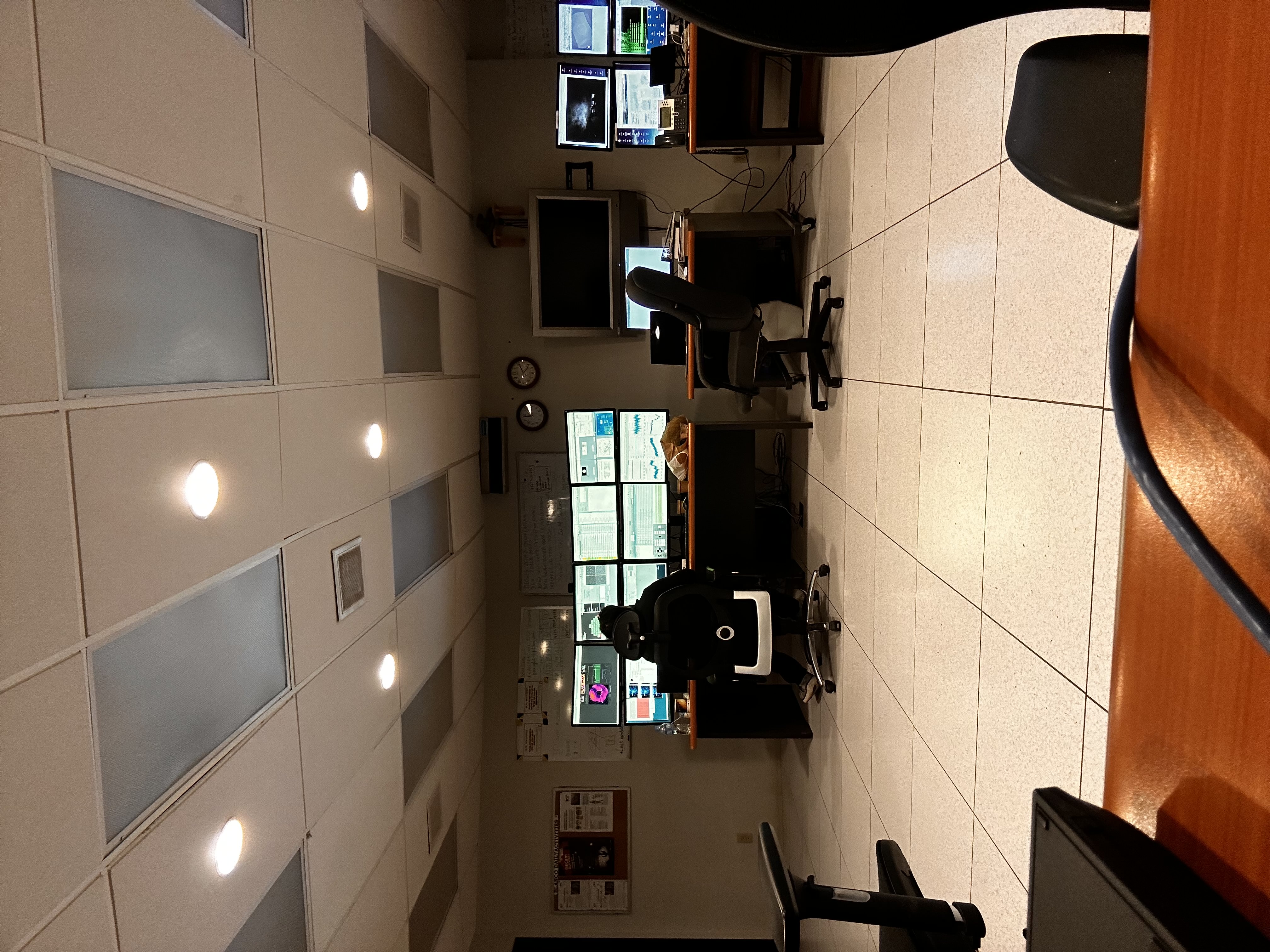
<p>We received some great in-person advice and support from the Science and Observing Support team here today. Once I figured out the controls, I got busy with the fancy control setup!</p>

<p><img src="/images/blog/2023-11/busy-observing.jpg" alt="image tooltip here" /></p>

<p>Sadly, the entire night was pretty much a bust because of unuusal cloud coverage. Fingers crossed for tomorrow!</p>]]></content><author><name>Tanveer Karim</name></author><category term="astronomy" /><category term="travel" /><summary type="html"><![CDATA[First in-person observing run since the Pandemic!]]></summary></entry><entry><title type="html">Annular Solar Eclipse</title><link href="https://tanveerkarim.github.io/posts/2023/10/blog-post-1/" rel="alternate" type="text/html" title="Annular Solar Eclipse" /><published>2023-10-18T00:00:00-04:00</published><updated>2023-10-18T00:00:00-04:00</updated><id>https://tanveerkarim.github.io/posts/2023/10/blog-post-1</id><content type="html" xml:base="https://tanveerkarim.github.io/posts/2023/10/blog-post-1/"><![CDATA[<p>Regardless of who you are, if you have ever experienced a total solar eclipse in your lifetime, chances are you would want to experience it again. One could try to show you photos and explain to you the sensations of it, but it is almost impossible to describe the magic that takes place, as you see the day turn into night within minutes, the temperature drop a few degrees, and the fauna lose their minds.</p>

<p>Having experienced a total solar eclipse once before in my life (2010 in Bangladesh), I knew that I wanted to re-experience it again sometime in the future. So when I saw an opportunity to my first ever annular solar eclipse, I could not give up the chance to do so!</p>

<h1 id="total-versus-annular-eclipse">Total Versus Annular Eclipse</h1>

<p>So if you are not familiar with the terms, you may be asking what is the difference between a total and an annular solar eclipse? To start off, the distance between the Sun and the Earth is roughly 400 times the distance between the Moon and the Earth. On the other hand, the diameter of the Sun is about 400 times the Moon’s diameter. So by this coincidence, the Moon can completely cover the Sun which leads to a total eclipse. However, if the Moon is at its farthest point relative to us, then its apparent size becomes just small enough for ~10% of the Sun to still be exposed during a full eclipse, causing a “Ring of Fire” to pop-up around the Moon; this is an annular eclipse.</p>

<h1 id="three-days-in-utahn-parks">Three Days in Utahn Parks</h1>
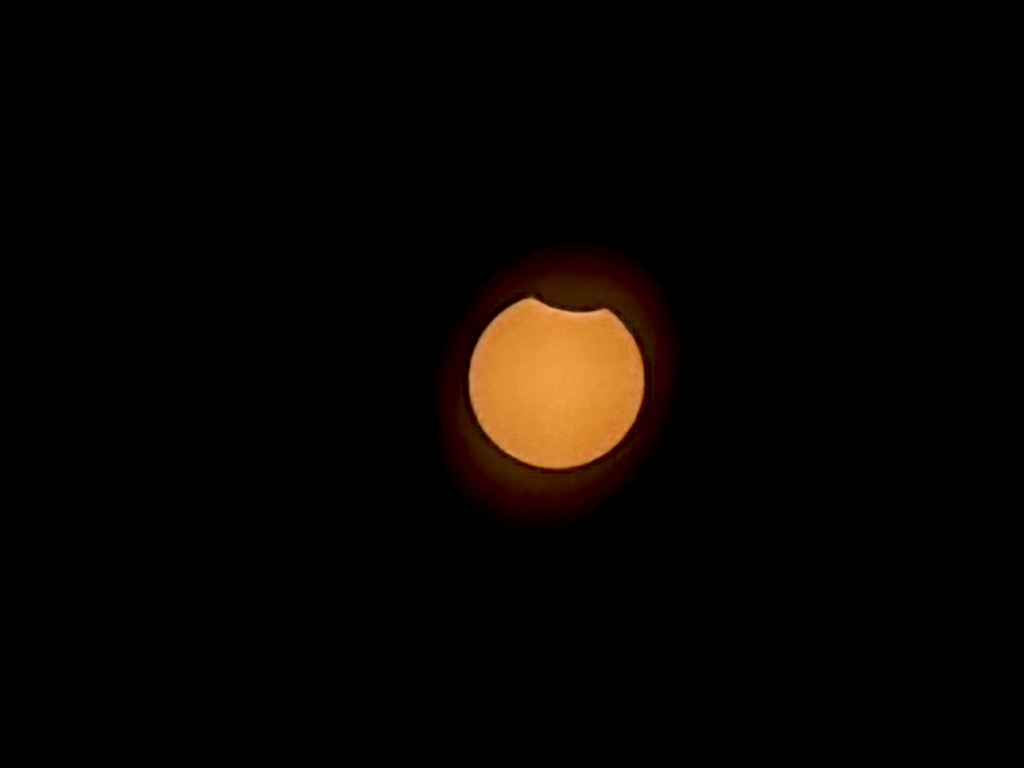
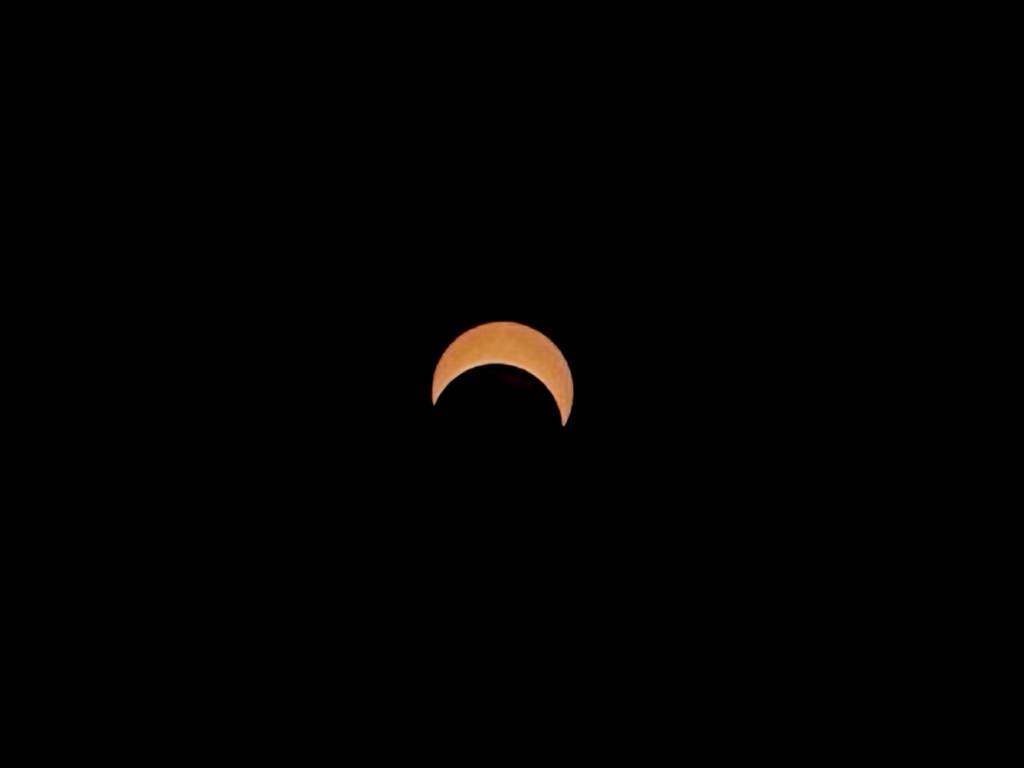
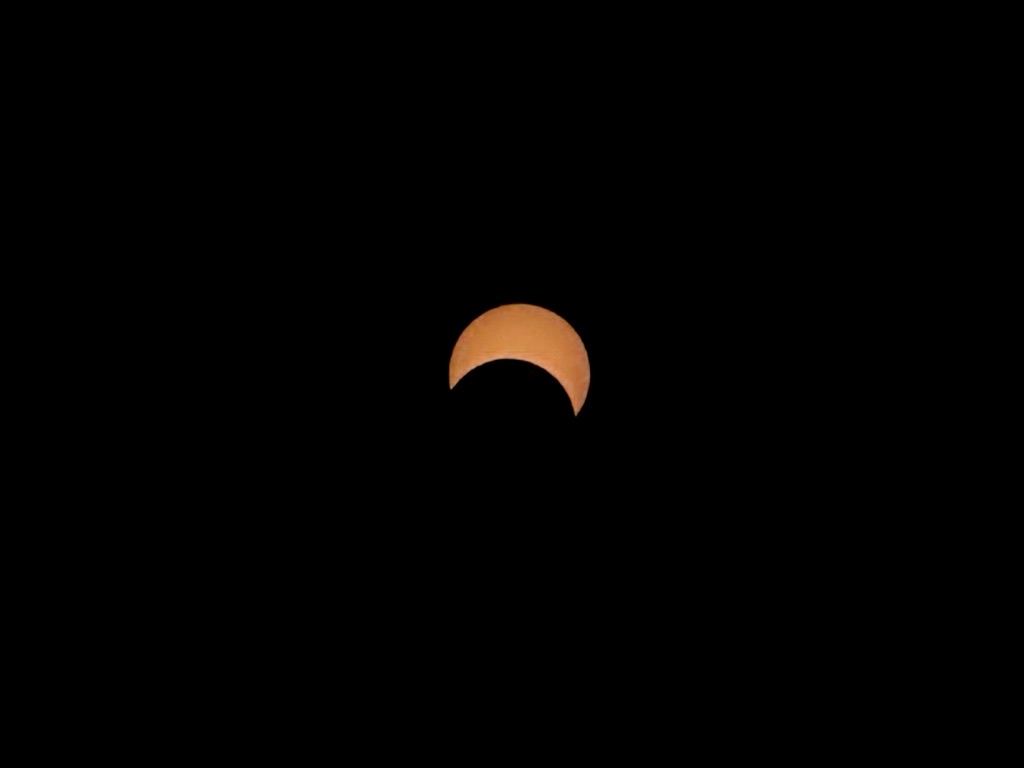
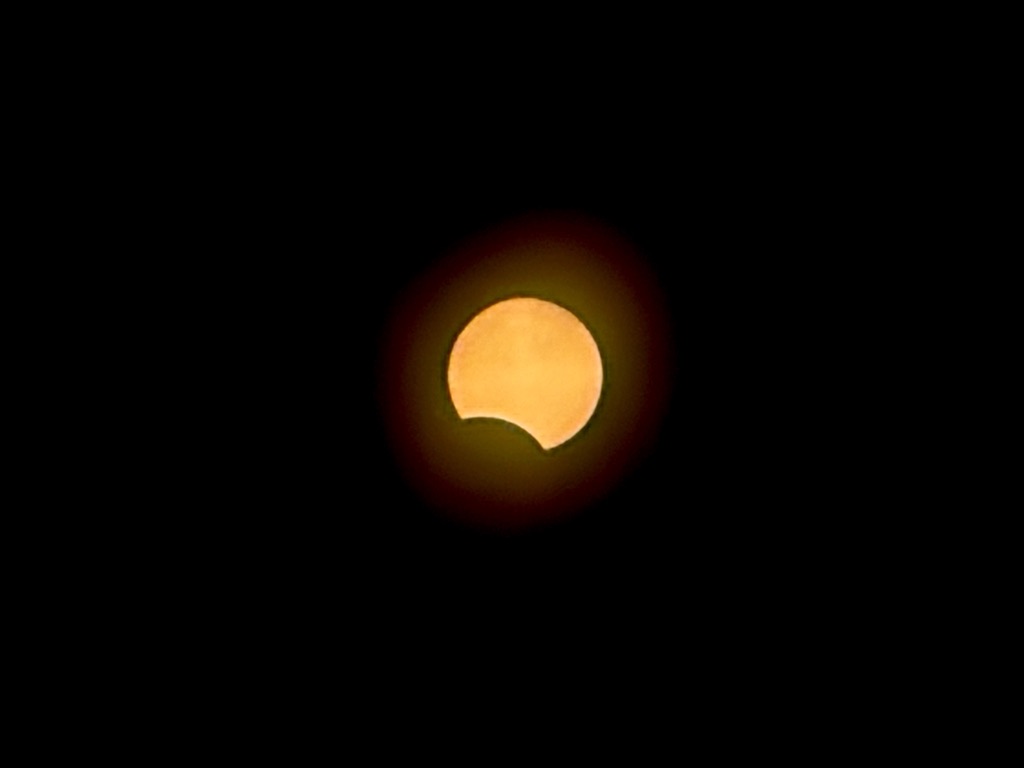
<p>The hunt for the annular eclipse took us to Southeastern Utah, where we visited the <a href="https://stateparks.utah.gov/parks/dead-horse/">Dead Horse Point State Park</a> for sunset, the <a href="https://stateparks.utah.gov/parks/goblin-valley/">Goblin Valley State Park</a> for sunrise and the annular solar eclipse on October 14th, the <a href="https://www.nps.gov/care/index.htm">Capitol Reef National Park</a> for another sunset, and the <a href="https://www.nps.gov/arch/index.htm">Arches National Park</a> for some incredible hikes. Here are some photos from the solar eclipse!</p>

<p><img src="/images/blog/2023-10-18/eclipse-1.jpeg" alt="image tooltip here" />
<img src="/images/blog/2023-10-18/eclipse-2.jpeg" alt="image tooltip here" />
<img src="/images/blog/2023-10-18/eclipse-3.jpeg" alt="image tooltip here" />
<img src="/images/blog/2023-10-18/eclipse-4.jpeg" alt="image tooltip here" /></p>]]></content><author><name>Tanveer Karim</name></author><category term="astrophotography" /><category term="travel" /><category term="outreach" /><summary type="html"><![CDATA[Hanging out with the Sun and the Moon in Southeast Utah]]></summary></entry></feed>